The Garden District Isn't One Historic District. It's Three, and Only One Needs a Permit to Swap Your Windows.
September 3, 2026
September 3, 2026
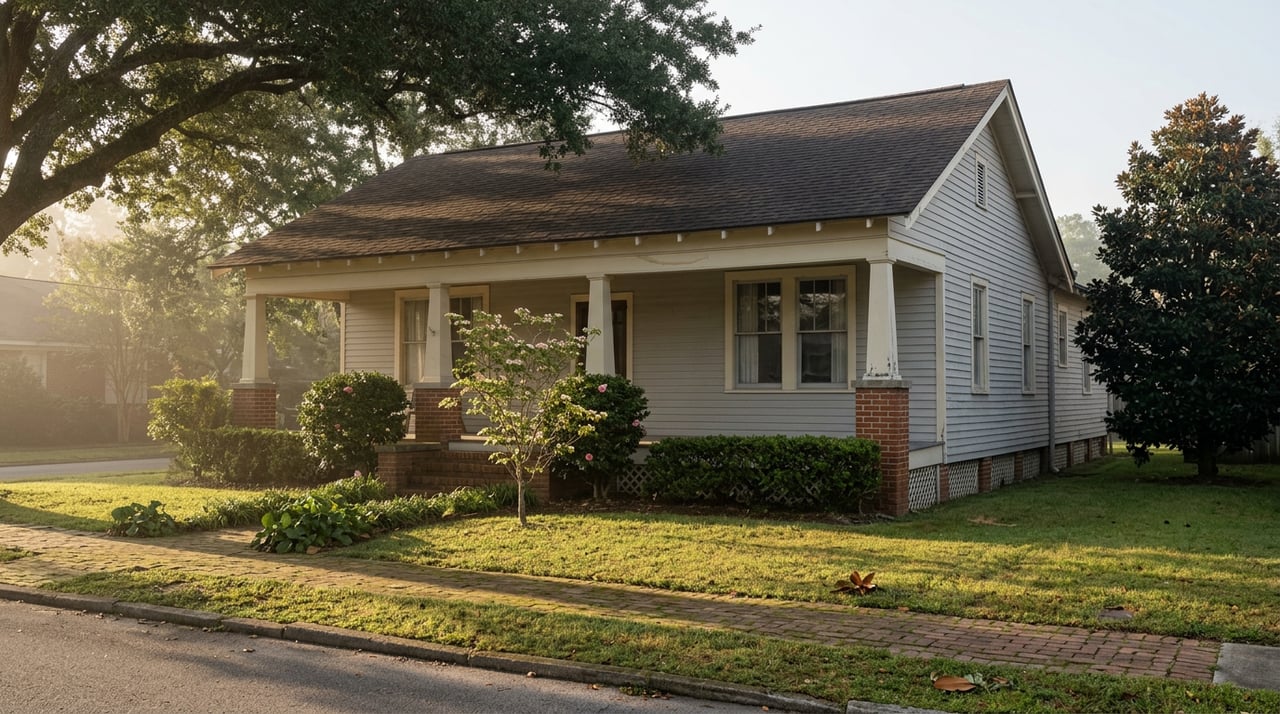
A buyer looking at two 1920s bungalows three blocks apart in Baton Rouge's Garden District will see the same listing language for both: oak-lined street, original hardwood, walk to Government Street. What the listing won't tell you is that replacing the porch railing on one house triggers a city review process, and replacing the same railing on the other doesn't require so much as a phone call.
That's not a quirk of one property. It's baked into how the Garden District was built and how the city has regulated it ever since. If you're seriously comparing addresses here, this is the fact that should shape your offer, not an afterthought you discover mid-renovation.
"Garden District" is the name a group of residents chose in 1976 when they formed the Garden District Civic Association, borrowing the prestige of New Orleans's famous neighborhood for a stretch of Baton Rouge that was, legally speaking, three separate early-20th-century subdivisions that happened to sit next to each other.
Roseland Terrace came first, platted in 1911 by the Zadok Realty Company on land that had been a racetrack. It's bounded by Government, 18th, Myrtle, and 22nd Streets, and it's the one most people picture when they think "Garden District bungalow." Drehr Place followed in 1919, roughly bounded by Government, 22nd, Myrtle, and St. Rose Streets. Kleinert Terrace came last, developed in the late 1920s and bounded by Myrtle Avenue, Perkins Road, Broussard Street, and South Eugene Street.
All three carry National Register of Historic Places status, which is largely honorary. It tells you the neighborhood has architectural and historical significance and can open the door to tax incentives for substantial rehab work. What it does not do, by itself, is require you to ask anyone's permission before you change your house.
Only one of the three carries something stronger. Drehr Place became Baton Rouge's first Local Historic District in 2005, nominated for that status by the Garden District Civic Association itself. Local historic district status means the East Baton Rouge Parish Historic Preservation Commission has actual regulatory authority over what you do to the outside of your house.
Here's the mechanism, stated plainly. In Baton Rouge, a Certificate of Appropriateness is required for any exterior change to private property that's visible from a public street and sits within a locally designated historic district, unless the work counts as ordinary maintenance and repair. That requirement exists in Drehr Place. It does not exist in Roseland Terrace or Kleinert Terrace, because neither has been designated a local historic district.
A side-by-side look at what that actually means:
| Roseland Terrace | Drehr Place | Kleinert Terrace | |
|---|---|---|---|
| National Register status | Yes, listed 1982 | Yes, listed 1997 | Yes, listed 1998 |
| Local Historic District | No | Yes, since 2005 | No |
| Certificate of Appropriateness required for street-visible exterior work | No | Yes | No |
| Notable contributing structure | Reiley-Reeves House | Sanders House | Manship House |
So a new fence, a roof replacement, a window swap, or a front-facing addition in Drehr Place goes through the Historic Preservation Commission before you pull a building permit. The same project on a Roseland Terrace or Kleinert Terrace address does not trigger that review, even though both sit inside National Register boundaries and both are commonly marketed under the same "historic Garden District" banner.
None of this touches interior work. The Historic Preservation Commission doesn't regulate paint color, and changes that aren't visible from the street or aren't structural generally fall outside its reach anywhere in the parish.
If your address is in Drehr Place and your project needs a Certificate of Appropriateness, the process isn't free but it isn't punishing either. Changes that don't require a building permit can be approved by the Planning Director with no public hearing and no fee. Changes that do require a building permit carry a $200 fee to advertise the public hearing, and if construction starts before the Certificate of Appropriateness is issued, a $100 processing fee gets added on top.
The bigger cost is usually time, not money. A project that would break ground the week your permit clears in Roseland Terrace might sit for weeks in Drehr Place waiting on a hearing date. If you're buying with a tight renovation timeline before a move-in date or a lease expiration, that difference is worth building into your calendar before you write an offer, not after your contractor calls asking where the paperwork is.
Here's where the story gets interesting for anyone actually planning to restore one of these houses. Louisiana's Restoration Tax Abatement program offers up to a ten-year abatement of property taxes on renovations to owner-occupied residences located within a qualifying historic district, downtown development district, economic development district, or opportunity zone. For an owner-occupied home, the rehab has to be valued at least 25 percent of the assessed valuation of the building, which is typically figured at 10 percent of appraised market value.
The program doesn't require local historic district designation. It requires the property to sit within a qualifying district, and a National Register historic district generally qualifies. That means a substantial restoration in Roseland Terrace or Kleinert Terrace can potentially access the same property tax abatement as one in Drehr Place, without ever going through a Certificate of Appropriateness hearing.
If you're the kind of buyer who wants historic tax benefits without a design review board weighing in on your window trim, Roseland Terrace and Kleinert Terrace are worth a closer look. If preserving the block's exact character matters more to you than renovation speed, Drehr Place's oversight is doing exactly what its residents asked for when they nominated it back in 2005.
This isn't tax advice, and the math changes with every property's assessed value and scope of work, so run the numbers with a tax professional before you count on the abatement in your offer strategy.
As of June 2026, homes in the Garden District ranged from $12,500 to $820,000, with a median sale price of $325,000, up 6 percent year over year, and a median 106 days on market compared to a national average of 58. That's not a typo and it's not one neighborhood behaving inconsistently. It's three subdivisions with different lot sizes, different architectural stock, and, as you now know, different renovation friction, all reported under one neighborhood name.
A small Roseland Terrace bungalow on a narrow lot with rear alley access is a different asset than a Drehr Place house on a wider boulevard lot, which is a different asset again from a multi-lot Kleinert Terrace property near Perkins Road. Renovation flexibility is part of what buyers are pricing in, whether they realize it or not. A buyer planning a major addition has real reasons to prefer the district without a design review process. A buyer who wants the neighborhood to look exactly the way it has for a hundred years has real reasons to prefer the one that regulates it.
A short list worth working through with your agent before you go under contract on any pre-1950 Garden District house:
How do I find out which of the three districts a specific Garden District address is in? The boundary streets are public record and your agent can confirm it against the address before you tour, not after you're under contract.
Does the tax abatement require the house to already be in a local historic district? No. It requires the property to sit in a qualifying district, which includes National Register historic districts, so Roseland Terrace and Kleinert Terrace properties can qualify without Drehr Place's local designation.
What kind of work skips the Certificate of Appropriateness process entirely, even in Drehr Place? Ordinary maintenance and repair that doesn't change the design, material, or outward appearance of a feature is generally exempt, and anything not visible from a public street falls outside the review entirely.
If you're weighing a Roseland Terrace bungalow against a Drehr Place house against something in Kleinert Terrace, the pricing and the renovation math aren't the same conversation. That's exactly the kind of detail worth a direct answer instead of a guess. Caleb Jackson knows these three districts block by block and can tell you same-day which one actually fits your plans. Reach Out Today.
Stay up to date on the latest real estate trends.
Born and raised in Baton Rouge, I've built my business across Zachary, St. Francisville, New Roads, and the Felicianas. Most of my clients come from people I've already closed for, and the people they send me. That's not an accident. It's the result of pricing straight, marketing hard, and negotiating harder on every deal.
CALEB JACKSON
ADDRESS 37325 MARKET PL DR PRAIRIEVILLE, LA 70769